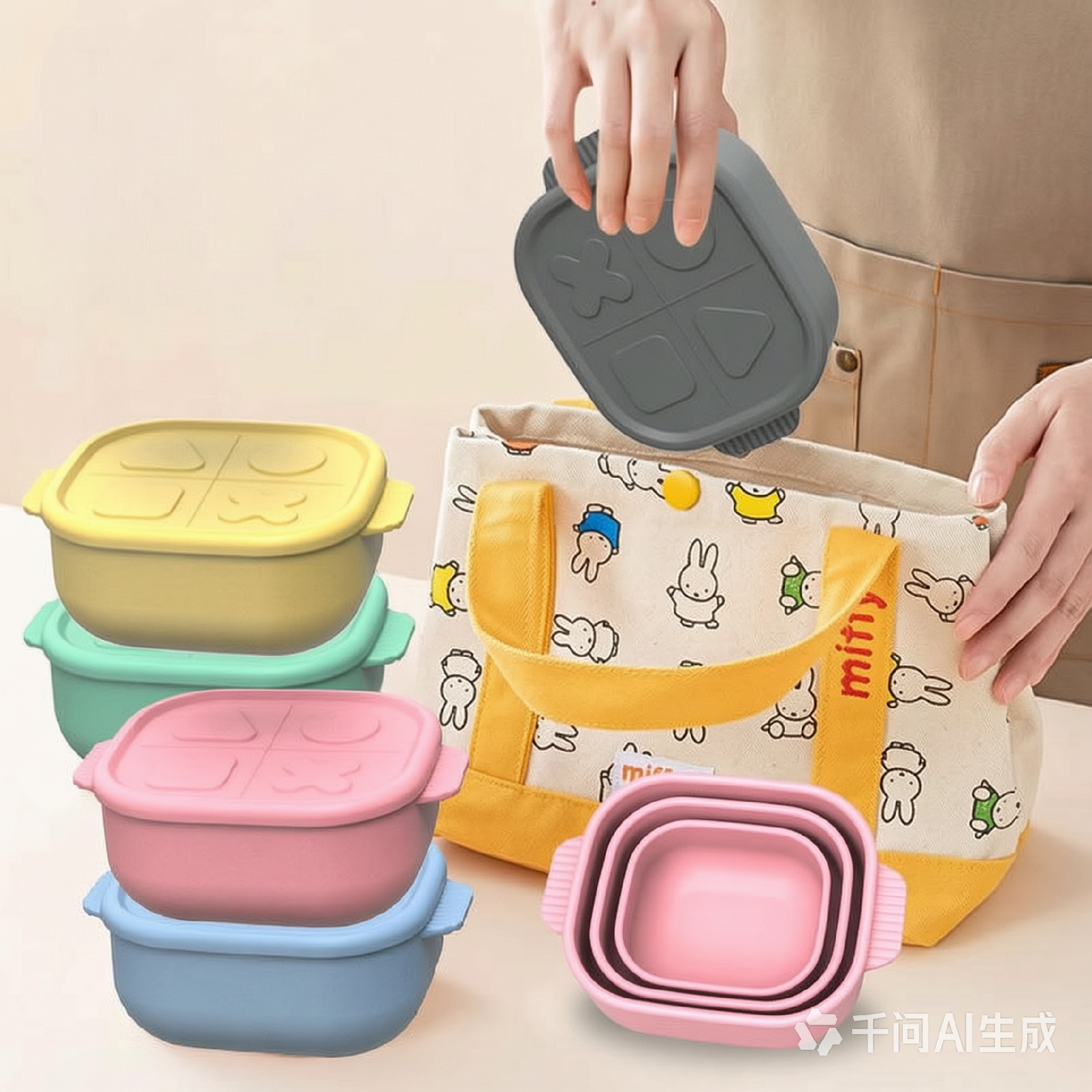
Silicone Picnic and Travel Tableware: Building an Outdoor Retail Assortment That Ships Flat
Read:6
Outdoor retail lives on a simple commercial truth: gear that packs flat sells, and gear that cracks on gravel returns. Silicone picnic and travel tableware is the rare category that improves both numbers at once — it collapses or nests for packing, tolerates being sat on, dropped and frozen, and washes clean in a camp sink. The buying conclusion: build the assortment around a small family of bodies that nest together, then differentiate with colour and accessories, not with more tooling.
Where silicone fits in the outdoor tableware shelf
The outdoor aisle offers enamel plates, hard-anodised aluminium, PP melamine-style sets and silicone. Enamel looks heritage but chips and is unforgiving in a pannier. Aluminium is light but noisy, dents, and cannot hold soup comfortably. PP is cheap but brittle in cold weather and looks disposable. Silicone's pitch is flexibility in every sense: bowls that collapse to a third of their height, mats that roll, boxes that nest, and nothing that shatters when a dog steps on it. For brands targeting campers, van-lifers, festival-goers and family picnickers, silicone also photographs well in lifestyle settings, which matters more than most buyers expect for sell-through.
The core assortment, item by item
| Item | Typical spec | Why it sells | Watch-outs |
|---|---|---|---|
| Collapsible bowl | 500–1,000 ml expanded | The category anchor; campers and dog owners both buy it | Hinge fatigue; test 200+ fold cycles |
| Collapsible kettle/mug | 250–400 ml | Pairs with camp stoves; strong add-on margin | Handle heat path; rim seal quality |
| Collapsible food box | 600–900 ml | Day trips, sandwiches, leftovers | Gasket corners; see leak testing below |
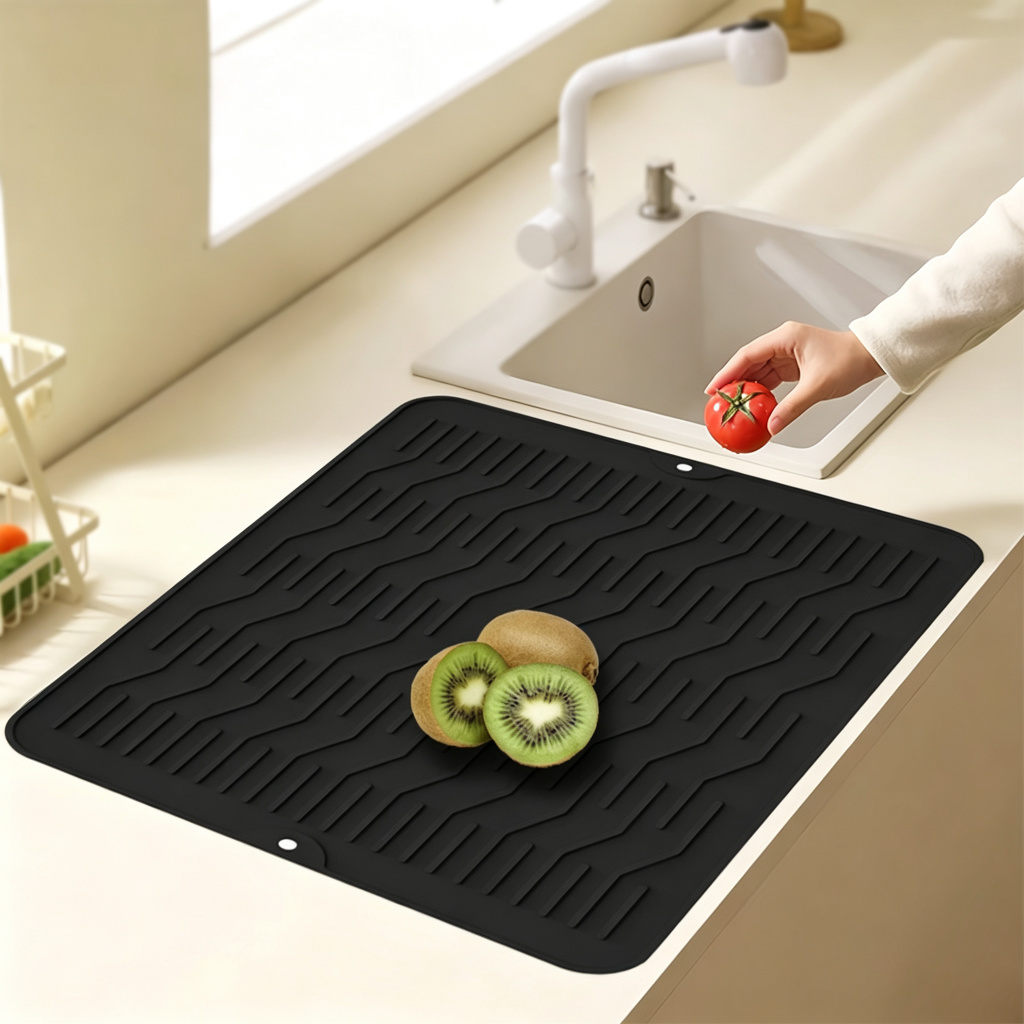
| Roll-up placemat | 40–45 cm wide | Clean eating surface anywhere; flat packs | Edges curl if too thin; specify 1.5–2 mm |
| Foldable water bottle | 500–750 ml | Completes the set story at retail | Cap valve design decides leak performance |
Four to six SKUs built on shared tooling families cover most outdoor retail needs. Every additional bespoke shape costs a new tool and slows the range; colourways are nearly free by comparison because pigment is mixed at compounding. The disciplined play is few bodies, many colours.
Portability engineering: folds, hinges and pack size
Collapsibility is a mechanism, not a material property. The fold walls live on living hinges that flex hundreds of times over the product's life, so hinge thickness, radius and silicone grade determine whether the bowl survives two seasons or one. Ask suppliers for fold-cycle test data — a simple 200-cycle test at room temperature plus a 50-cycle test at freezer temperature reveals most hinge problems early. Pack size claims should be measured, not estimated: publish collapsed height in millimetres on packaging, because campers compare those numbers across brands.
Roll-up mats and fold-flat boxes avoid hinges entirely by using flat walls that bend along scored channels, which is why they dominate the value end of the assortment. Reserve hinged products for the mid-premium slots where their collapsed volume earns the cost.
Outdoor-specific performance testing
Outdoor use adds failure modes a kitchen never sees. UV exposure degrades cheap compounds into a chalky surface within a season; ask for accelerated UV ageing data before writing any "fading resistant" claim. Grit and sand scratch printed logos — debossed or moulded-in branding survives camping life far better than screen print. And because picnic gear is often cleaned with boiling water or left on a hot picnic table, the compound should hold its properties at continuous exposure up to roughly 200 °C, which standard platinum-cured grades do.
Compliance for food-contact outdoor goods
Everything in this assortment touches food, so the same rules apply as indoor kitchenware: FDA 21 CFR 177.2600 for the US, LFGB-based requirements for Europe, with certificates covering the coloured compound. One outdoor-specific nuance: brightly coloured compounds left in strong sunlight can show migration drift in some low-grade recipes, so require the test report for the outdoor colourways specifically, not just a natural-colour reference.
Cost, MOQ and order structure
Collapsible items carry more tooling complexity than flat items — hinge channels and wall thickness transitions need precise mould work — so new-tool programmes typically quote samples in two to three weeks and mass production three to five weeks after approval, with MOQs commonly in the 1,000–2,000 piece band per colourway. Flat items (mats, fold-flat boxes) tool faster and cheaper. Because silicone goods are light, freight rarely dominates landed cost; packaging that keeps items collapsed during transit matters more, so specify a packaging hold form that prevents pop-open in the carton.
What to put in the RFQ
- Target use (camping, picnic, festival, pet travel) so wall thickness and hinges are engineered accordingly.
- Expanded and collapsed dimensions for every collapsible item, with pack-size targets.
- Colourways and whether mats, boxes and bowls share a palette.
- Branding method preference — deboss for durability, print for fine detail.
- Test list: fold cycles, UV ageing, leak method for boxes, boil-water cleaning.
- Retail packaging format and whether items must hold their collapsed form in transit.
FAQ
Are collapsible silicone bowls durable enough for daily use?
When the hinges are engineered with correct radii and a platinum-cured compound, they survive hundreds of fold cycles and years of use. Hinge failure after a season is a sign of an under-specified design; ask for fold-cycle test data before ordering.
Can I put boiling water in a silicone camp bowl or kettle?
Yes — food-grade platinum silicone is stable well above boiling temperature. Handles and rims stay hot, so packaging should still advise care; test the specific geometry with boiling water before printing fill-line claims.
Do silicone picnic items pick up sand and grit permanently?
No — grit rinses out and the non-stick surface sheds sand easily. What does wear is a printed logo abraded by grit; debossed or moulded-in branding is the durable choice for outdoor programmes.
What MOQ should I plan for a custom picnic range?
Industry-typical MOQs start around 1,000–2,000 pieces per colourway for new tools, lower for standard bodies with logo customisation. Fewer bodies with more colours keeps MOQs and compound inventory manageable.
Next step
Send your assortment plan and pack-size targets for a manufacturability review, or browse reference designs under silicone outdoor products and silicone kitchen products. The full product catalogue shows the tooling families most outdoor sets build on.