Silicone Hardness Explained: How to Choose Shore A for Your Product
Read:7
Most custom silicone consumer products sit between 30 and 60 Shore A, and that narrow band is where feel, durability and unit cost are decided. The practical conclusion for buyers: specify hardness as a nominal value with an explicit tolerance, then validate it against wall thickness and part geometry — a durometer number on its own does not predict how a part will feel or perform in the hand.
What Shore A actually measures
Shore A is a durometer reading of resistance to indentation, taken with a spring-loaded needle according to ASTM D2240 or ISO 48-4. It is a surface measurement that only gives a reliable number on a flat sample of sufficient thickness — conventionally about 6 mm. Read a thin wall, a curved surface or a ribbed area and the needle bottoms out or bridges, and the number becomes meaningless.
Two consequences follow for anyone writing a purchase specification. First, hardness is a property of the compound, not of the finished part, so the number should be quoted from a test slab moulded from the same batch, not from a random production piece. Second, the tolerance matters more than the nominal value: ±5 Shore A is normal for compression moulding, while ±3 is achievable with tighter process control and usually costs more in scrap. A drawing that says "40 Shore A" with no tolerance invites a dispute you cannot win, because 45 Shore A is a perfectly ordinary moulding of a 40 Shore A compound.
Hardness bands and where products sit
The table below reflects industry-typical practice for consumer silicone goods. Treat the ranges as orientation for a first conversation, not as a substitute for sampling.
| Shore A | Feel | Typical parts | What to watch |
|---|---|---|---|
| 10–20 | Gel-soft, highly stretchy | Suction bases, soft grips, skin-contact pads | Poor tear strength; difficult demoulding; flash control is harder |
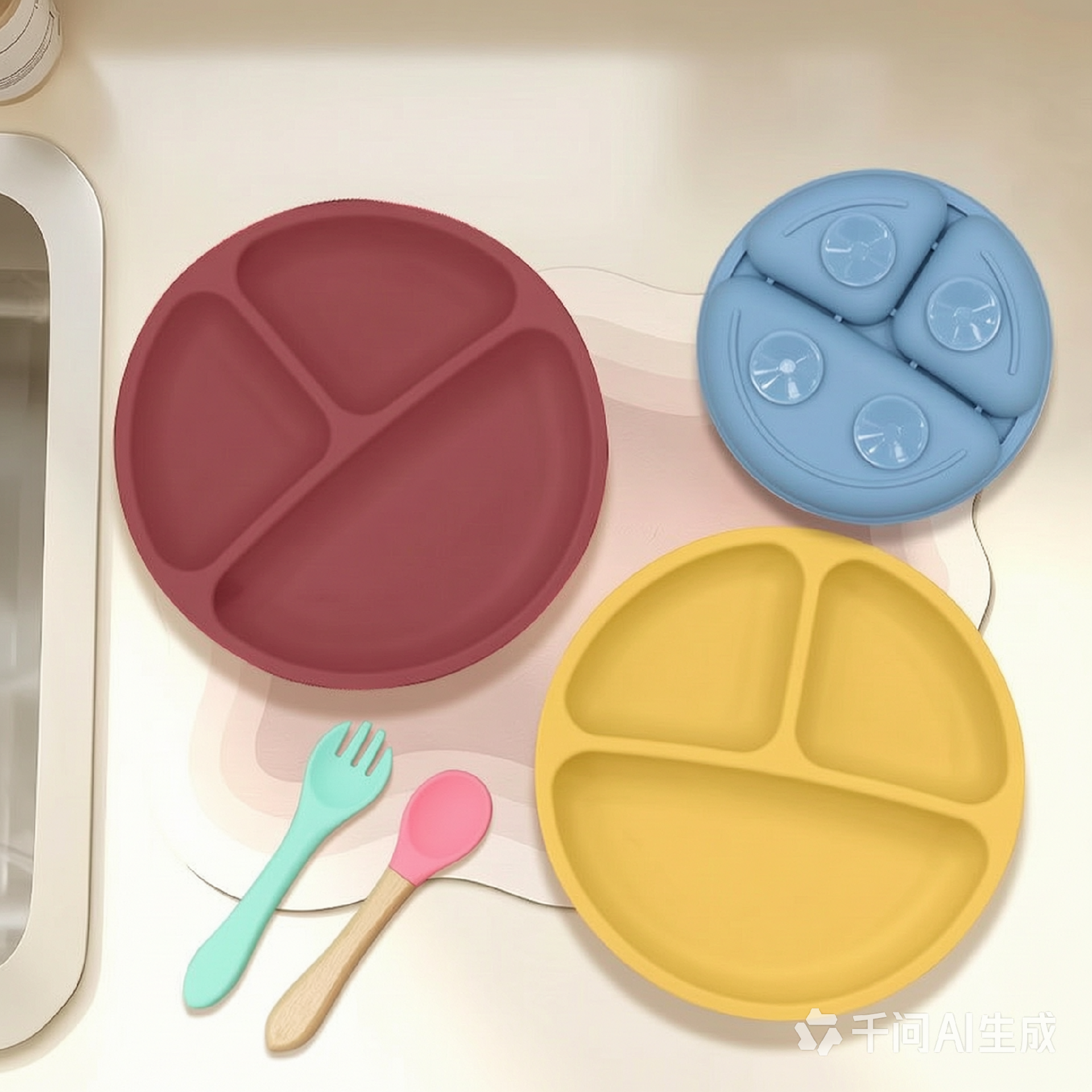
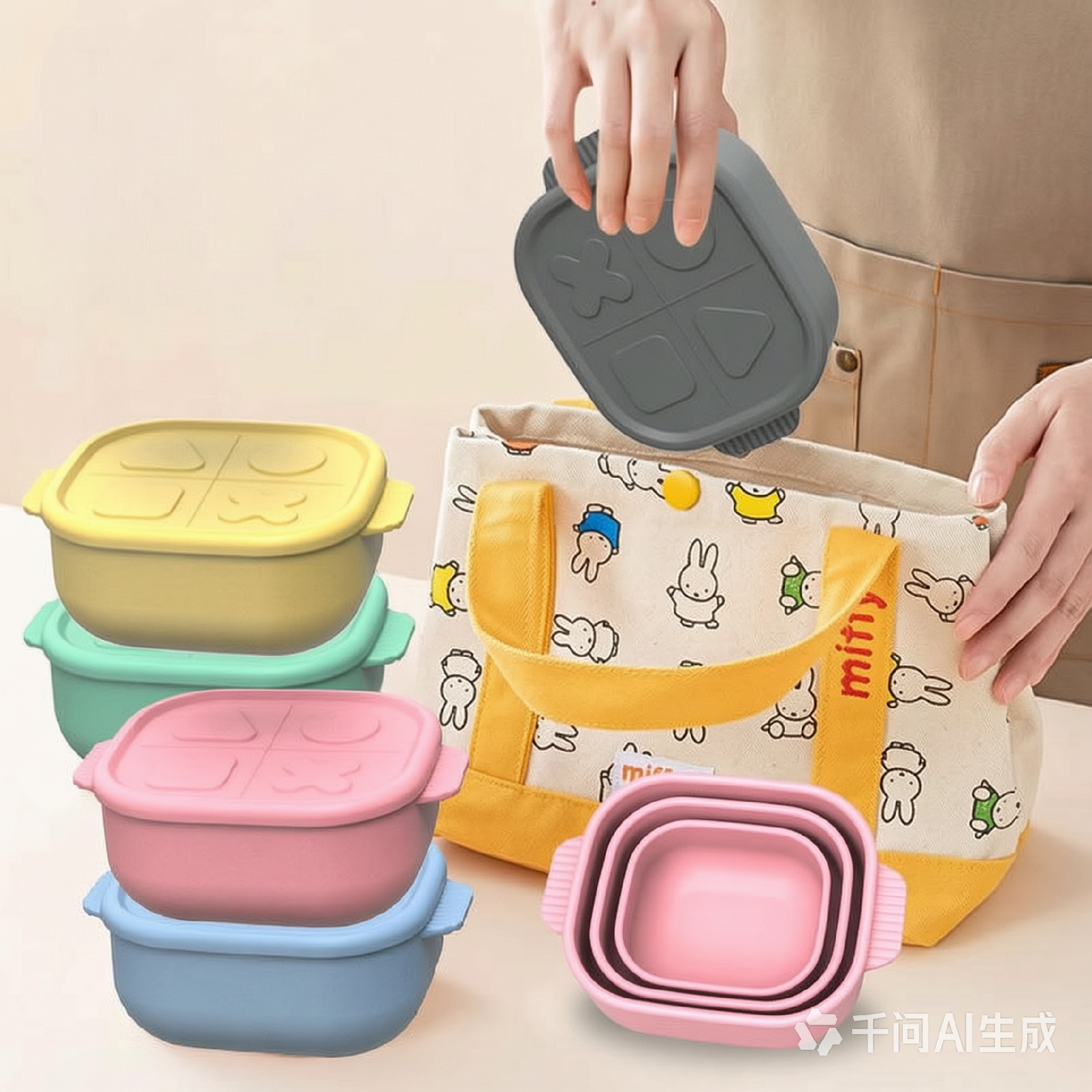
| 30–40 | Soft and compliant | Teethers, spoon tips, travel bottle bodies, collapsible bowls | Thin walls collapse; needs generous radii |
| 40–50 | Medium soft, the workhorse band | Spatulas, lids, gaskets, phone cases, cup sleeves | Most colour and print work happens here; verify food-contact grade |
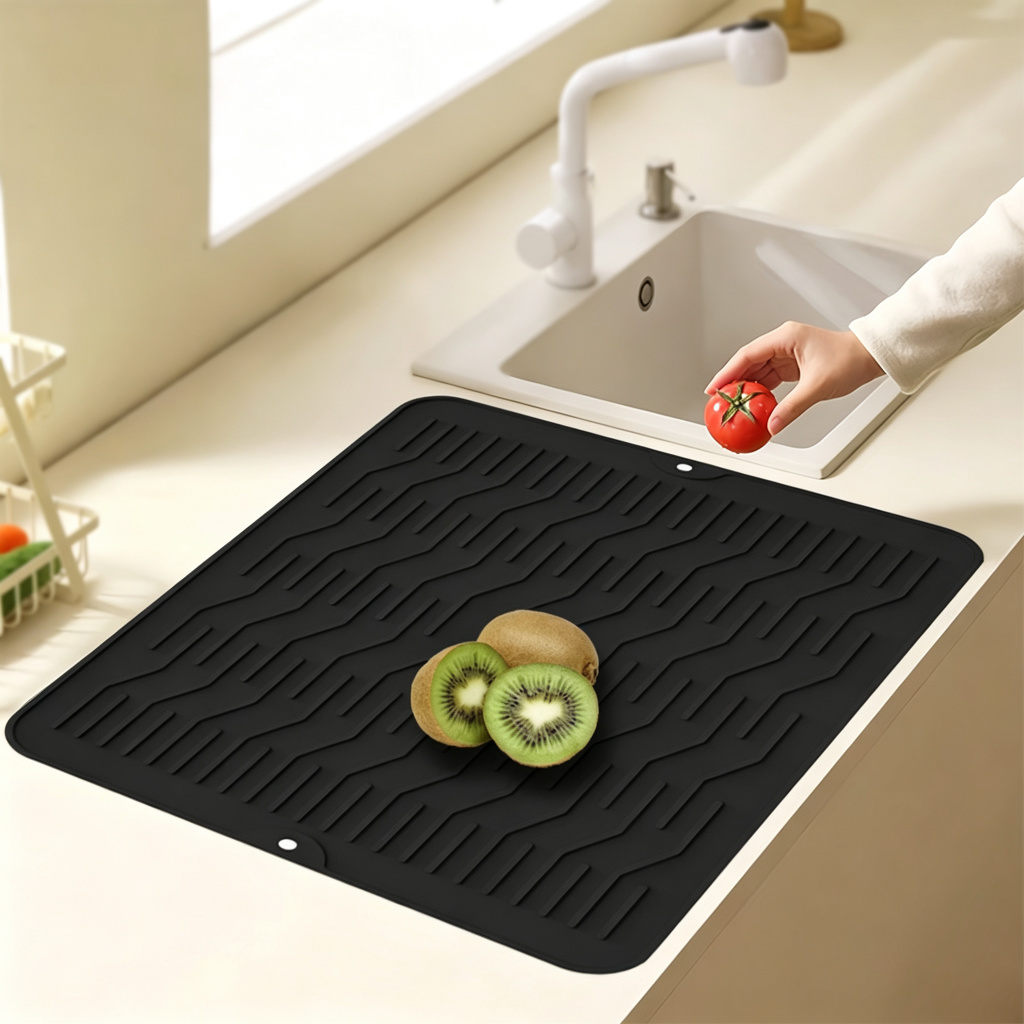
| 50–60 | Firm but flexible | Baking mats, oven gloves, utensil heads, jar openers | Stiffness can read as "cheap plastic" if walls are thick |
| 60–70 | Semi-rigid | Feet, bumpers, structural gaskets, cable glands | Draft and ejection need attention; undercuts tear |
| 70–80 | Hard rubber | Industrial seals, rollers, wear pads | Compression set behaviour changes; confirm with data |
Hardness is not stiffness
This is the single most common misunderstanding in silicone sourcing. Stiffness — how much a part deflects under load — depends on the compound hardness and the section geometry. A 40 Shore A wall of 4 mm feels firmer in the hand than a 60 Shore A wall of 1.2 mm, because deflection scales strongly with thickness. Buyers who evaluate samples by squeezing them are therefore judging geometry as much as material.
Practically, this means a hardness change is often the wrong fix for a "too floppy" complaint. If a travel bottle collapses when squeezed, going from 40 to 55 Shore A adds cost and reduces the squeeze feel; thickening the body wall from 1.2 mm to 1.6 mm, or adding a reinforcing rib, usually solves it with less material change and no new compound. Conversely, if a part feels harsh, softening the compound rarely helps a thick section — thinning the wall does.
How hardness moves cost and tooling
Soft compounds are not automatically cheaper. Below roughly 30 Shore A, flashing becomes harder to control, parts cling to the cavity, and manual demoulding time rises, all of which push unit price up. Very soft compounds also tear at the parting line during deflashing, so yields drop. Harder compounds in the 60–70 range typically run faster cycles with cleaner release, but they demand better draft and stronger ejection, and in liquid silicone injection they require higher pressures and more robust tooling.
There is also a material-cost effect that surprises buyers: compounding to a precise hardness often requires more filler control, and platinum-cured grades at the soft end can carry a premium. Ask for the price at your target hardness and at the nearest standard band — the difference is frequently small enough that you should choose on function, not on pennies.
Specifying hardness on a drawing
A specification that a factory can actually hold looks like this:
- Nominal and tolerance: "45 ±5 Shore A, ASTM D2240, measured on a 6 mm test slab of the production compound."
- Cure system: platinum-cured addition silicone, stated explicitly, because peroxide-cured material behaves differently in odour and compression set.
- Colour: Pantone reference plus a stated tolerance, since pigment loading slightly shifts hardness.
- Post-cure: whether a post-cure cycle is required, and at what temperature and duration, because post-curing raises hardness marginally and reduces volatiles.
- Functional requirement: where the part seals, specify compression set or compression force deflection instead of relying on hardness alone.
- Food-contact status: state the market and the requirement, for example "materials to meet FDA 21 CFR 177.2600" or "LFGB-compliant grade", and ask for the supporting test report with the sample.
When a different softness metric is better
Shore A is the wrong instrument in three situations. For foamed silicone, use density and compression force deflection, since there is no meaningful durometer reading on a cellular structure. For gels and very soft skin-contact pads, Shore 00 is the appropriate scale. For thin films and stretchy membranes, tensile strength and elongation at break describe behaviour far better than a needle reading. Naming the right metric in the RFQ is a quick way to separate suppliers who understand the material from those who are quoting a catalogue number.
FAQ
Can I get the same feel at a lower hardness to save material?
Usually not in the way buyers expect. Lower hardness does not reduce material weight per part unless you also thin the section, and thinning the section changes stiffness more than hardness does. If cost is the driver, ask for a wall-thickness optimisation study rather than a hardness downgrade.
Why do my samples read differently on a durometer than the spec?
Nearly always because the reading was taken on a curved or thin area of the finished part. Ask the factory for the reading on a flat slab, and check that the gauge was calibrated and the sample was at room temperature — cold compound reads harder.
Does hardness affect food-contact compliance?
The base polymer and additive package determine compliance, not the durometer. A soft and a hard grade from the same compliant series can both be suitable. What matters is that the specific compound has the test report for your market, and that any pigment or process aid is covered by it.
How many hardness grades should one product family use?
As few as possible. Every additional grade means a separate compound batch, a separate colour run and a separate set of test data. Consolidating to two grades across a range typically reduces both unit price and quality risk.
Next step
Send us your part drawing with the target hardness, wall sections and market requirements, and we will return a manufacturability opinion on whether the geometry supports that durometer, plus a quotation. Start with our custom silicone OEM and ODM service, or look at reference parts in silicone kitchen products and silicone baby products for the hardness bands those categories typically use.