Silicone Car Accessories: Heat, Fogging and Interior Material Requirements
Read:22
A car interior is a harsher environment than most buyers assume: a dashboard surface can exceed 90 °C in summer sun while the cabin air is 40 °C, and it cycles there and back every day for years. Silicone handles that heat comfortably, which is why it is a good material for mats, grips, phone mounts and console liners. The failures that do occur are rarely heat degradation of the silicone itself; they are fogging, staining, adhesion loss and dimensional creep, and each has a specific specification that prevents it.
Why silicone suits the cabin, and where it does not
| Requirement | Silicone performance | Watch point |
|---|---|---|
| Temperature cycling | Stable well beyond dashboard temperatures | Compression set in long-term loaded parts such as seals |
| UV exposure through glass | Good inherent resistance | Pigments can shift; specify lightfast colourants |
| Fogging (condensation on glass) | Depends on volatiles and post-cure | Under-cured or heavily plasticised compounds emit films |
| Staining of upholstery | Low risk with well-cured silicone | Oil-based additives and some pigments can migrate |
| Abrasion from keys, cups, phones | Moderate | Sharp objects can tear; consider a higher hardness or a textured surface |
| Adhesion to plastic or glass | Poor without treatment | Suction or mechanical fixing beats adhesive on silicone |
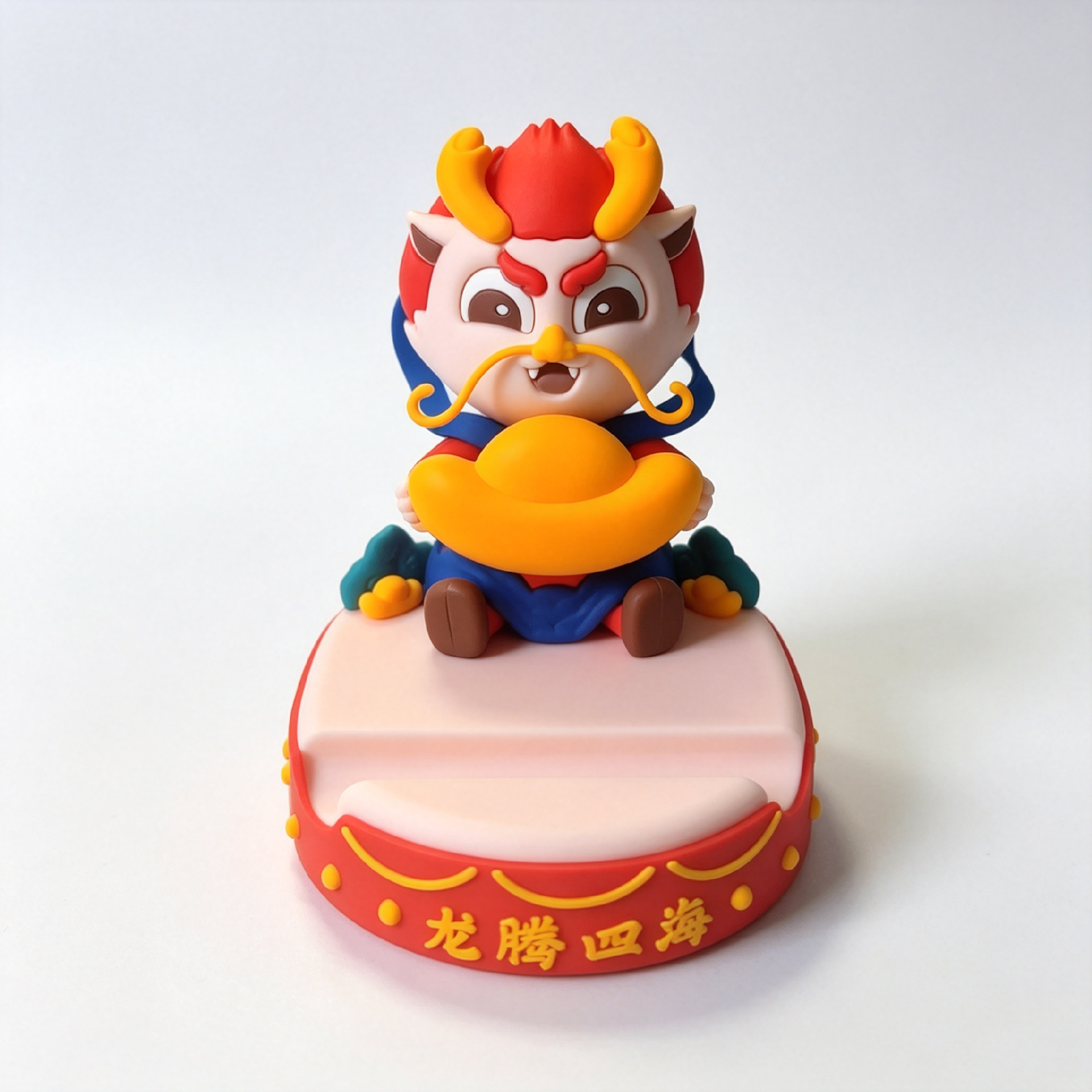
The table explains a pattern in this category: silicone parts that rely on adhesion fail, and silicone parts that rely on geometry, weight or suction succeed. A silicone phone mount that sticks to a dashboard with double-sided tape will detach in a hot car; the same mount with a suction base and a mechanical cradle works.
Fogging: the test that separates suppliers
Fogging is the condensation of volatile material onto interior glass, and it is measured by heating a sample and collecting what evaporates onto a cooled plate. Automotive OEMs specify limits for interior materials, and while an aftermarket accessory is not always subject to the same rules, the test is still the best proxy for whether a part will leave a film on a windscreen.
What drives fogging in silicone parts: residual volatiles from incomplete cure, low-molecular-weight siloxanes in the compound, and any plasticiser or processing aid. The remedies are a proper post-cure, a compound selected for low volatility, and avoiding additives that were never intended for interior use. Ask a supplier for a fogging value and the test method; a supplier who has never been asked will not have the number, which itself tells you something about their automotive experience.
Heat aging and compression set
For mats and liners, heat aging is mostly about colour and hardness drift. A part that hardens by 10 Shore A over two summers will feel different and may crack at flex points. For seals and gaskets, compression set is the critical property: a silicone seal that takes a permanent set under load stops sealing, even though the material has not degraded.
- Specify hardness with a tolerance, not a single number — and state whether it is measured on the finished part or on a slab.
- For any part held under compression, specify compression set at the service temperature and duration, not at room temperature.
- For colour, specify a lightfastness test rather than a verbal assurance, especially for light greys and beiges that show yellowing first.
Design details that decide whether the part works
Three geometric issues recur in car accessories. First, anti-slip texture: a moulded pattern with undercuts traps dust and is hard to clean, while a shallow rib pattern gives grip and wipes clean. Second, drainage and cable routing: a console liner that traps a spilled drink against a connector is a warranty claim waiting to happen. Third, tolerance on locating features: a mat that is 2 mm oversized buckles in a footwell, and one that is undersized slides.
Because these parts are usually large and shallow, tooling cost is driven by platen size and steel volume rather than by complexity. That makes a prototype run in a cheaper tool a reasonable way to validate fit before committing to a production mould.
Compliance in this category
Aftermarket accessories are generally not type-approved components, but three obligations still apply: the destination market's general product safety rules, REACH restrictions on substances in articles if you sell into the EU, and the vehicle manufacturer's own requirements if you supply through a tier-one channel. If the part is sold as a child-facing product, toy rules may apply as well. A flammability requirement can appear for interior textiles and foams, though moulded silicone parts are usually outside that scope — confirm rather than assume.
Our practice on car programmes is to fix the fogging and heat-aging specifications at sample approval, alongside fit, so the first production batch is measured against the same criteria as the prototype. The current formats are on the silicone car accessories page, and the same material and tooling discipline carries across the product range.
FAQ
Will silicone melt on a dashboard in summer?
No. Silicone service temperature is far above any cabin condition. What fails at dashboard temperatures is adhesive, low-grade plastic clips and under-cured silicone that emits volatiles — not the silicone itself.
Why does a silicone mat leave a mark on a leather seat?
Usually migration from an additive or a pigment in the compound, sometimes combined with pressure and heat. A well-cured compound with lightfast, non-migrating pigments avoids it; test by leaving a sample on the actual upholstery in a warm environment before production.
Can silicone parts be glued into a car interior?
Adhesion is the weak link because of silicone's low surface energy. Mechanical fixing, suction, or a rigid carrier with the silicone overmoulded onto it are all more reliable than tape or glue, especially across temperature cycles.