Baby Products Compliance: EN 14372, EN 1400 and CPSIA Testing for Silicone Items
Read:16
Baby products attract more compliance paperwork per kilogram than almost any other silicone category, and most of the cost sits in testing rather than material. The practical rule is simple: the standard follows the product's function, not its material. A silicone spoon is a feeding utensil and falls under EN 14372 in Europe; a silicone soother falls under EN 1400; a teether sold in the United States falls under CPSIA and the applicable ASTM toy and pacifier rules. Getting the mapping right before tooling avoids re-testing a finished product later.
Mapping product to standard
| Product | Europe | United States | What is actually being tested |
|---|---|---|---|
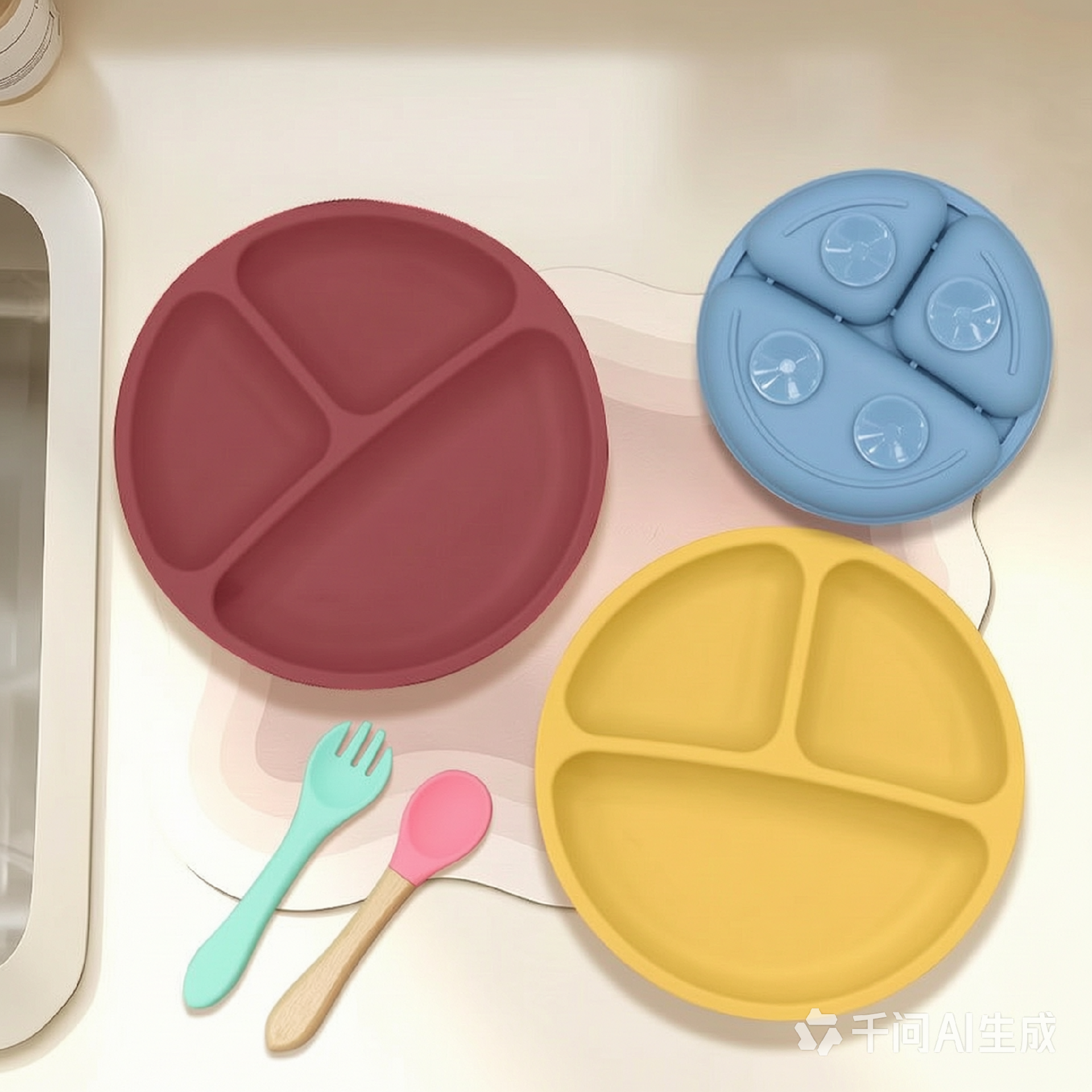
| Cutlery, bowls, plates, feeding sets | EN 14372 (cutlery and feeding utensils) | CPSIA plus FDA food-contact requirements | Mechanical hazards, migration of certain elements, volatile organic compounds, nickel release where metal is present |
| Soothers / pacifiers | EN 1400 | 16 CFR 1511 and CPSIA | Shield dimensions and ventilation, nipple strength, retention, small-part hazards |
| Teethers and toys | EN 71 series, plus REACH | ASTM F963 and CPSIA | Small parts, sharp edges, phthalates, heavy metals, flammability in some cases |
| Bibs and soft feeding accessories | EN 14372 where used with food; otherwise general product safety plus REACH | CPSIA, plus food-contact rules if food touches the item | Migration, phthalates, attachment strength |
Two clarifications save money. First, food-contact rules and child-safety rules are separate obligations and both usually apply — a silicone spoon must satisfy food-contact migration limits and mechanical safety requirements. Second, a certificate of material conformity from the silicone compounder is not the same as a finished-product test report. Buyers regularly receive the first and believe they hold the second.
What each test actually proves
Migration testing simulates food contact over time and temperature and measures what transfers into the food simulant. For silicone this usually means overall migration plus specific migration of substances of concern, run on the finished article in its real use condition. A material datasheet cannot substitute, because cure, post-cure and pigment can all change the migration profile.
Volatile organic compounds testing matters more for silicone than many buyers realise. Under-cured silicone releases short-chain siloxanes, which show up as an odour and a taste. A part can pass migration limits and still fail a sensory panel, which is why a smell test at first article is worth doing even when no standard demands it.
Mechanical tests on feeding items focus on the failure modes a child can produce: a spoon handle that snaps into a sharp shard, a bowl rim that peels, a suction base that detaches with force. These are function-specific and often depend on wall thickness and durometer more than on the material grade.
Where the real risk sits: change control
The most common compliance failure in this category is not a bad material; it is an unannounced change. A factory switches pigment supplier, shortens post-cure to gain capacity, or substitutes a slightly harder compound to fix a demoulding problem — and the tested configuration no longer matches production. Test reports are only meaningful if the bill of materials and process parameters are locked and changes are notified.
- Freeze the compound grade, colour reference and post-cure condition in the specification, not just the drawing.
- Require written notification before any change to compound, pigment or cure schedule, with re-testing at the brand's option.
- Keep the tested sample and its batch record so that a future deviation can be compared against something physical.
- Re-test at a defined interval — annually is common — rather than assuming the first report is permanent.
What to send a factory before they quote
A compliance-aware quotation needs four inputs: destination market, product function (what it touches and how it is used), the brand's own specification if one exists, and the target test laboratory or scheme. With those, a factory can list the tests required, quote them as a separate line, and estimate the sample quantity each test consumes. Without them, testing becomes a post-production surprise that delays the container.
Our practice is to put testing on the quotation as its own itemised line — test name, standard, laboratory, sample quantity, lead time and validity — so the buyer sees the cost before tooling rather than after. This is also the point at which we tell a client that a claim on their packaging is unsupported by the test plan, which is cheaper to hear now than at customs.
Claims language: what you may and may not print
Retail compliance teams increasingly reject vague claims. "BPA free" is defensible for a silicone part only if the whole assembly — including any rigid insert, valve or printed ink — is free of bisphenol A, and the claim should be supported by a test. "Food grade" is not a legal category in either the EU or the US; it is shorthand that should be replaced with the actual standard and the actual report reference. "Medical grade" should never appear on a baby product without a specific standard behind it.
The safe pattern is factual and specific: the standard tested, the laboratory, the report number and the date. Buyers who print that on a specification sheet spend less time answering retailer questions and more time selling.
How this changes the sourcing conversation
A compliance-led brief is also a useful filter. Factories that routinely make baby items can tell you, without looking anything up, which tests a silicone spoon needs for Germany versus California, how many samples each test consumes, and which laboratory they use. Factories that make general silicone goods will offer to "provide certificates" and mean the compound supplier's sheet. The first group costs slightly more per piece and considerably less per market launch.
We run baby programmes with the test plan agreed before tooling and the results attached to the golden sample, so the approved part and the tested part are the same object. You can see the current formats on the silicone baby products page, and the development sequence — drawing, tooling, first article, test, production — is described under our OEM and ODM service.
FAQ
Do we need separate tests for the EU and the US?
Yes, in most cases. The standards overlap in intent but not in method or limits, so a report to EN 14372 does not satisfy CPSIA and the reverse is also true. Some laboratories issue combined programmes that reduce sample consumption, but they are still two sets of results.
Is a food-contact material certificate enough for a teether?
No. Food-contact compliance covers migration; a teether also needs mechanical and small-part safety testing for the age group. Both are required, and a supplier who offers only the material certificate has covered half the obligation.
How long does testing take and when should it start?
Typically two to four weeks per programme, longer if a failure requires reformulation and re-submission. Start with the first production-intent samples, not with hand-made prototypes, because the tested configuration must match what you will ship.