Silicone vs TPE vs TPU: Choosing a Soft-Touch Material for Consumer Products
Read:15
Most soft-touch briefs land on the same shortlist: silicone, TPE or TPU. The choice is usually settled by three questions rather than by a materials datasheet — what temperature the part must survive, whether it touches food or skin, and whether it has to go through a dishwasher, steriliser or autoclave. If the answer to any of those is yes, silicone is normally the safe answer; if the part is a grip or a bumper that never gets hot, TPE will usually be 20–40 percent cheaper per piece.
The comparison that matters, in one table
| Property | Silicone (solid, compression or LSR) | TPE / TPR | TPU |
|---|---|---|---|
| Service temperature | Roughly −40 to 200 °C, briefly higher | Typically −40 to 90–110 °C | Typically −30 to 80–100 °C |
| Food and skin contact | Widely used; food-contact grades well established | Possible with the right grade, more documentation needed | Possible, less common for direct food contact |
| Dishwasher / steriliser | Yes, repeatedly | Degrades over repeated hot cycles | Softens and can deform |
| Abrasion resistance | Moderate; tears at sharp features | Moderate to low | Excellent |
| Colour and translucency | Good, but translucent grades show mould marks | Excellent, easy to match | Excellent, can be glass-clear |
| Feel | Dry, silky, low tack | Rubbery, can feel slightly oily | Firm, plastic-like |
| Relative unit cost at volume | Higher material cost, higher scrap discipline | Lower material cost, fast cycles | Moderate to high |
| Bonding to rigid plastic | Needs primer or mechanical interlock | Bonds well in 2K moulding | Bonds well in 2K moulding |
The table explains most sourcing arguments before they start. Silicone is not "better"; it is more thermally and chemically stable, and that stability is what you pay for. TPE and TPU are chosen when the part is decorative, structural or cost-driven, and when the temperature ceiling is comfortably below 90 °C.
Where silicone is over-specified
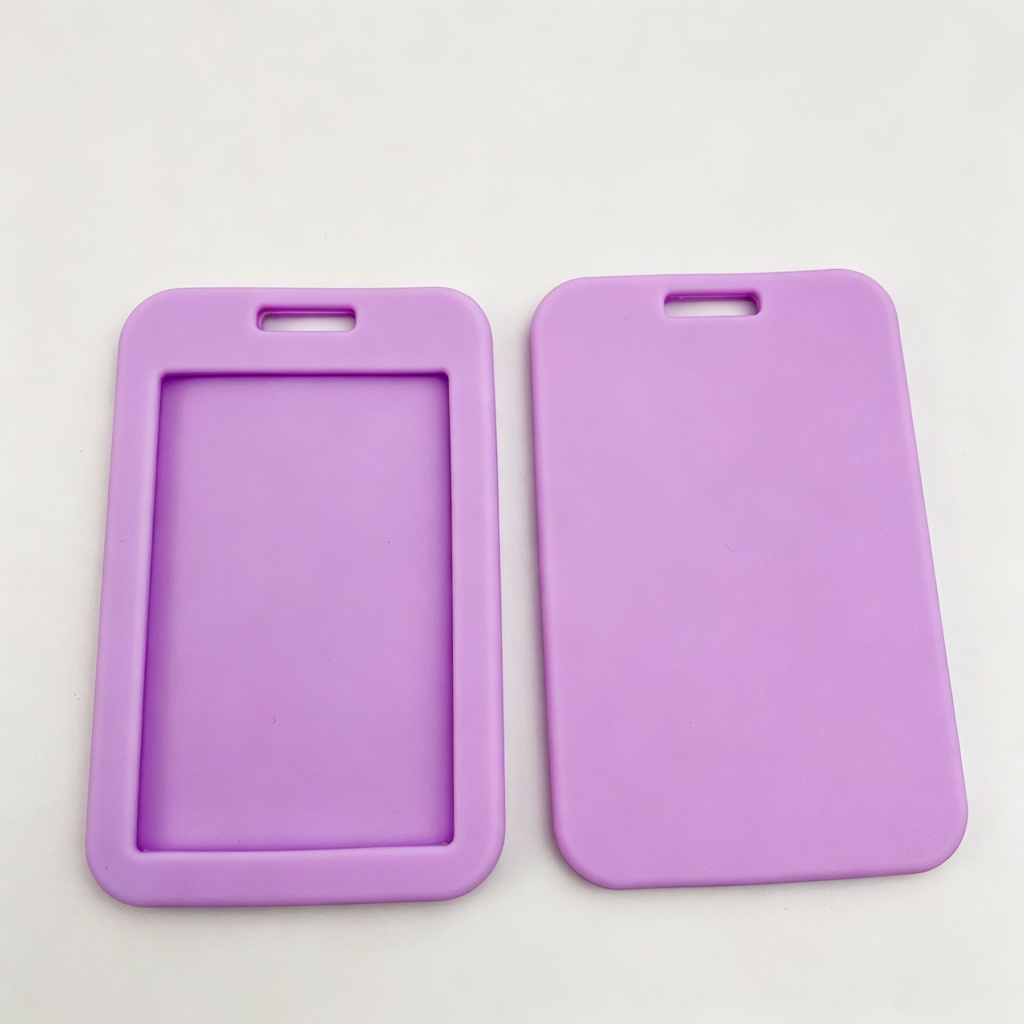
A silicone phone bumper, a silicone coaster and a silicone luggage tag are all cases where TPE would perform adequately and cost less. Buyers specify silicone anyway for three legitimate reasons: the brand story, the feel, and the fact that a single material across a range simplifies compliance and purchasing. Those are real reasons. What is not legitimate is specifying silicone because a colleague once had a TPE part fail in a hot car — that failure was almost certainly a grade or a stabiliser problem, not a category problem.
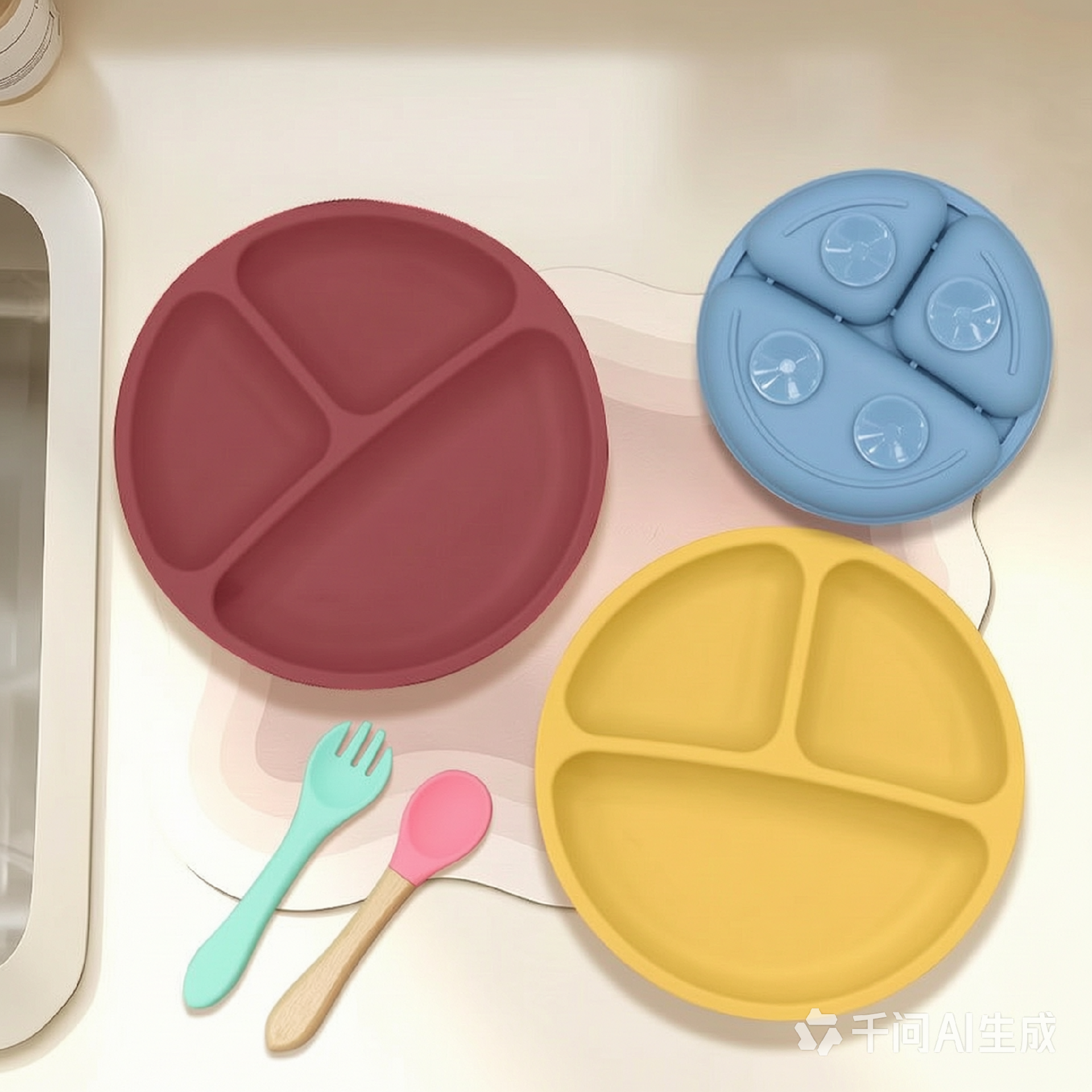
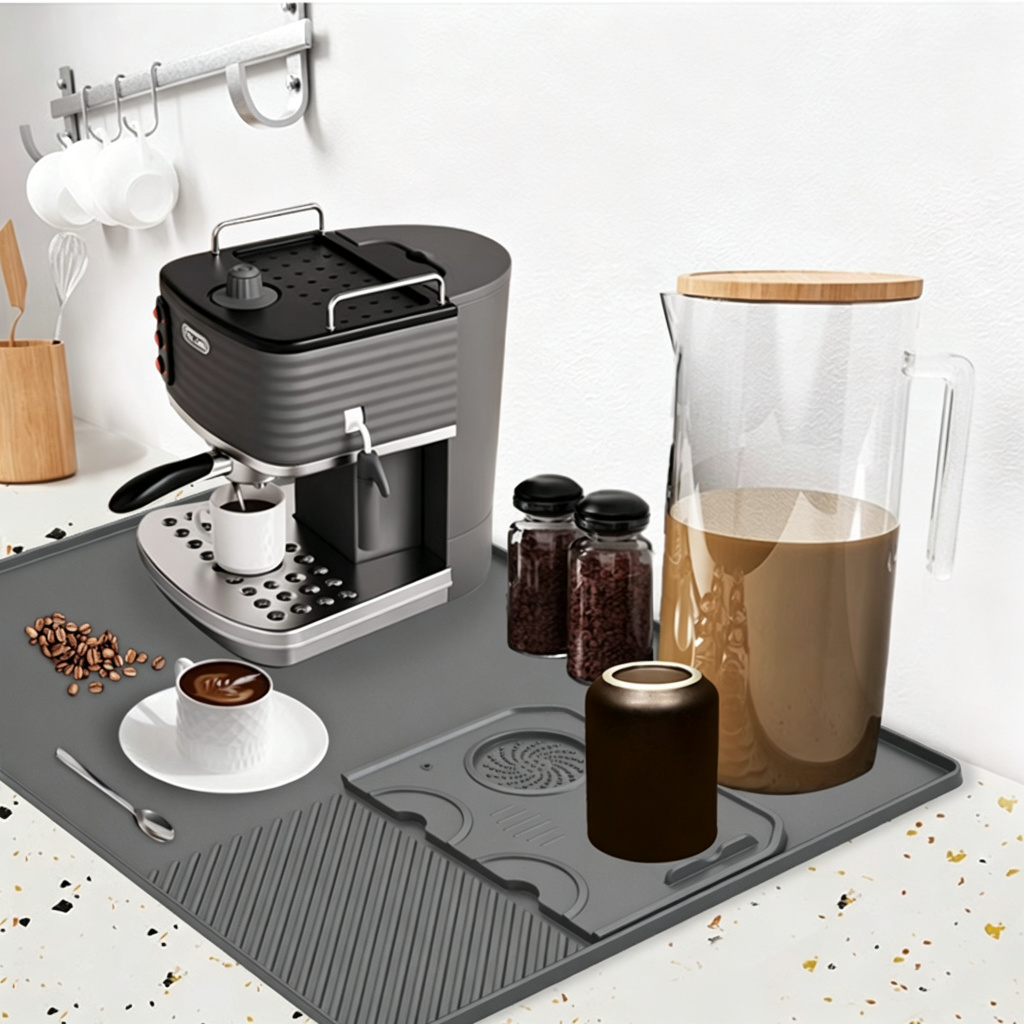
The reverse mistake costs more. A TPE spatula that meets a hot pan edge, a TPE baby bib that goes through a steam steriliser every day, or a TPE seal in a coffee machine will all fail in the field within months. Heat is the dividing line, and it is worth measuring the real service temperature of the part rather than the ambient temperature of the room it is used in.
TPE: the cost case and its hidden limits
TPE covers a family of styrenic block copolymer blends, and the formulation decides almost everything. A cheap TPE with a high oil content feels soft and costs little, but the oil migrates: the part can turn tacky in a warm warehouse, leave a film on packaging film, or stain a light-coloured surface it rests on. This is the single most common TPE complaint in consumer goods, and it is a formulation issue that a competent compounder can solve — at a price that narrows the gap with silicone.
TPE also has a compression-set problem. A TPE gasket or a TPE foot that stays compressed for months will not spring back the way silicone does. If the part's job is sealing or cushioning under permanent load, specify compression set at the intended temperature, not just hardness.
TPU: abrasion, clarity and a different feel
TPU is the right answer when the part must resist scuffing — wheel covers, tool grips, watch bands, clear cases — or when optical clarity matters. It is not a soft-touch material in the silicone sense: at the hardness needed for structural parts it feels like firm plastic, and at low hardness it becomes expensive and difficult to mould. TPU also absorbs moisture before processing, so drying discipline at the machine matters more than buyers expect, and skipped drying shows up as silver streaks and weak weld lines.
A decision sequence that works
- Write down the service temperature including cleaning cycles. Above 110 °C continuous, silicone is effectively the only option of the three.
- Confirm the contact scenario — food, mouth, skin, or none. Food and infant contact pushes toward silicone for documentation maturity.
- Test the feel requirement against a physical sample, not a photo. Soft-touch is a tactile decision and every material family has a different hand feel.
- Compare fully landed cost, including scrap rate and decoration yield. Silicone scrap is often higher on first articles; TPE decoration yield can be lower because of oil bloom.
- Check the tooling route. Silicone compression tooling and TPE injection tooling are not interchangeable, and the cavity count that makes TPE cheap may not exist for silicone at your volume.
What this means for tooling and minimum quantities
Material choice sets the process, and the process sets the minimum order. Compression moulding of silicone is economic at moderate volumes with simple, robust tools; LSR injection needs a bigger investment and rewards high volume. TPE and TPU run on conventional injection presses, which means cheaper tools and lower entry quantities, but also that the part must be designed for injection — wall sections, gates and ejector marks all become visible constraints.
If you are still at concept stage and unsure which route to take, the practical move is to ask for a material recommendation with the reasoning attached: service temperature, hardness, grade and expected cycle. We build that recommendation into our custom silicone OEM and ODM service, and we will say plainly when a part should be TPE rather than silicone. You can also compare finished references across the product range before committing to a material.
FAQ
Is silicone always more expensive than TPE?
At the material line, yes — often by a factor of two or more. At the finished-part line the gap narrows, because silicone cycles are slower but TPE scrap and decoration rework can be higher. Ask for a quoted unit price on both, at the same cavity count and hardness, before assuming the gap.
Can TPE be used for baby products?
Technically yes, with a food-contact grade and full migration testing. In practice most brands choose silicone for teethers and feeding items because the test documentation is more standardised and the material tolerates repeated sterilisation. If a supplier proposes TPE for a mouth-contact part, ask for the specific grade and the migration test report.
Why does a TPE part feel sticky after a few months?
Oil migration. The plasticiser that makes TPE soft gradually moves to the surface, especially in warm storage. A lower-oil formulation or a different block ratio reduces it. This is a formulation question to raise at sampling, not a cleaning problem for the end user.