Packaging Cost Engineering for Silicone and PVC Goods: How Format Choice Moves Unit and Landed Cost
Read:5
Packaging is the quiet line in every silicone and PVC quotation: small per unit, decisive in aggregate. On gift goods the packaging can represent roughly 15–30% of unit cost, and it also consumes freight volume — which means a packaging decision made in five minutes can move your landed cost more than a hard-won unit-price negotiation. The buying conclusion: engineer packaging at the quotation stage with three numbers in hand — packaging unit cost, carton per-unit freight impact, and damage rate by format — and let those numbers, not habit, pick the format.
The format ladder and what each level buys
Most programmes move along a ladder of five formats, each adding protection and shelf presence at a rising cost. Choosing the right rung is the core of packaging cost engineering:
| Format | Typical use | Relative cost | Freight impact | Damage exposure |
|---|---|---|---|---|
| Plain polybag | Industrial supply, bulk promotional | Lowest | Minimal | Highest; needs outer protection |
| Printed OPP bag | Promo goods with visible branding | Low | Minimal | Moderate; print can scuff |
| Backing card + bag | Peg-hook retail, keychains, charms | Low-mid | Small; cards ship flat | Low-moderate |
| Blister / clamshell | Hardware-adjacent retail, 3C accessories | Mid-high | High volume per unit | Low |
| Printed gift box | Corporate gifts, seasonal retail | Highest | High; boxes protect poorly when empty | Low if fitted; high if rattling |
The common mistake is buying one rung above what the channel needs — blister where a backing card sells equally well, or gift boxes for a giveaway that never meets a shelf. Each unnecessary rung adds cost twice: once in materials, once in freight volume.
Carton mathematics: where packaging really bites
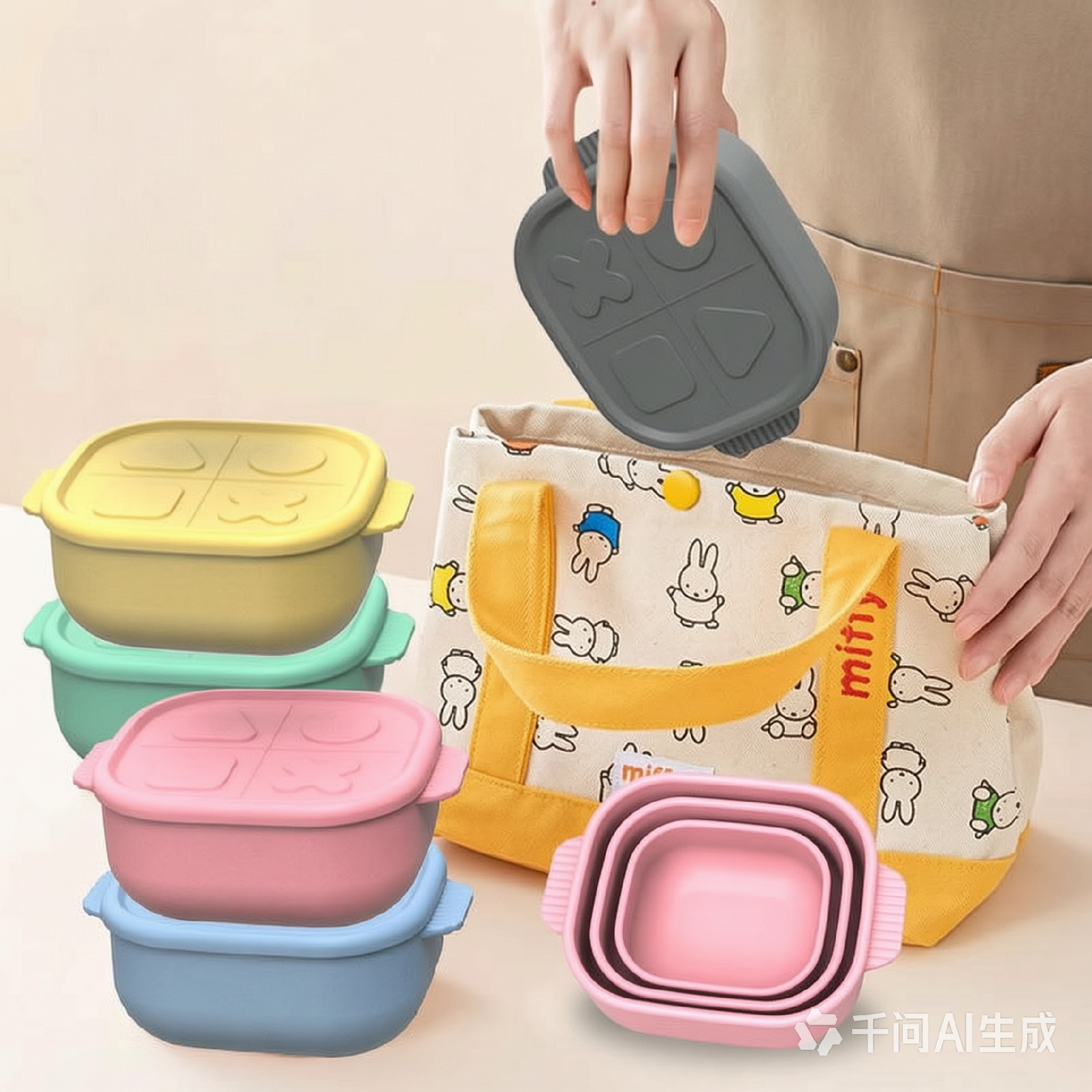
Freight is charged by volume or weight, whichever yields more, and bulky light goods pay the volume penalty. Packaging choices change the number of cartons, and cartons change the freight bill. Three practical levers matter more than most negotiations. First, nest and stack: flexible silicone goods can be nested if the packaging allows it — a rigid blister forces every unit to occupy its own volume, often doubling carton count versus a flat-packed equivalent. Second, carton fill: a carton that ships half-air pays full freight; agree inner-pack counts and carton dimensions with the factory rather than letting them default. Third, palletisation: if your distribution stack pallets, carton dimensions that waste pallet corners waste money on every lane. Ask the quotation to state units per carton, carton dimensions and estimated gross weight — these three figures let you compute freight per unit yourself and compare formats honestly.
Protection without volume
Damage is a packaging cost too, and it hides in return rates rather than quotations. Soft goods mostly need protection against scuffing, marking and crushing, not impact: a polybag plus dividers often protects a silicone bento lid better than a rigid shell that itself gets dented. Hard-cased goods — epoxy resin blocks, rhinestone-set items, keychains with plated hardware — need cushioning where the decorated face is. The efficient pattern is targeted protection: a small insert or a protective film on the decorated surface inside a low-cost outer, instead of upgrading the whole format. Validate with a simple drop test reference at the carton level, which the factory can run during sampling, and record the passing configuration in the specification so it survives into reorder batches.
Packaging as a compliance surface
For EU-bound goods, packaging now carries regulatory weight of its own: labelling obligations on the retail unit, and packaging-waste requirements (the PPWR direction of travel) that reward recyclable mono-materials over laminated composites. This is not only an environmental question but a cost one — composite laminates and mixed-material blisters trend toward higher end-of-life fees in some markets, while kraft and mono-PE alternatives trend cheaper to declare. When comparing formats, ask the supplier to flag which options are mono-material and recyclable; the packaging engineer's answer frequently coincides with the cheaper, simpler option anyway.
Locking the configuration for reorders
Packaging drifts between orders more quietly than the product does: a substituted carton, a thinner card, a changed inner count. Each drift is small; together they move cost and damage rates. The discipline is to freeze the packaging specification with the golden sample — artwork file, material, card weight, carton dimensions, inner count, drop-test configuration — and require the factory to flag any substitution before shipping. Reorder quotations should restate the packaging line explicitly rather than inherit it, because inherited packaging is where silent cost creep lives.
FAQ
What share of unit cost is packaging "normal"?
For promotional goods, low single digits to 10% is common; for gift-boxed retail items, 15–30% is not unusual. The useful question is not the percentage but whether the format matches the channel's real requirement.
Can silicone goods really ship nested?
Yes — most flexible silicone parts nest deeply, which is one of the category's freight advantages. The packaging must be designed to permit nesting; rigid blisters and pre-formed trays defeat it.
Who pays for packaging damage found at receiving?
It depends on the agreed packing specification and the Incoterm. A documented drop-test configuration and carton spec make the responsibility conversation short; undocumented packing makes it long.
Is custom-printed packaging worth it for a first order?
For retail programmes, usually yes, because unprinted goods sell poorly on shelf. A middle path for a first order is standard packaging with a printed insert card, upgrading to full custom print once the design is proven.
Next step
Send your channel and volume assumptions for a packaging-cost comparison across formats, or browse packaging-ready reference items in the kitchen products and product catalogue ranges. Our custom OEM and ODM service includes packaging design, drop-test validation and carton optimisation.